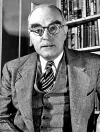
“A dramatist is one who from his earliest years has found that sheer gazing at the shocks and counter-shocks among people is quite sufficiently engrossing without having to encase it in comment.”
Quote collection
People Quotes — page 910 of 5018
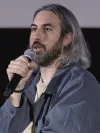
“The first half [of Valley of Violence] was to endear you to all these people and give you all these archetypes that you're familiar with, and then the second half, just to see all those archetypes unravel like real people.”
“Typically, in Westerns, people who are in a Western feel like they're in a Western. It's almost like they know they do all these Western things.”
“That's what's interesting about people. It can be funny, but when [John] Travolta got there and did [comic moments] you're like, "Oh! This is really funny." Or when Karen [Gillan] and Taissa [Farmiga] do something, I'm like, "This came out so much funnier."”
“There are people - I think this is why there are so many commercial directors doing well in big studio movies, for whom it's not a personal choice - it's "What's the coolest, most effective way to make them laugh, make them scream?" It's a very calculated approach. And that's different. It's not better or worse. It's just a very different approach to filmmaking. That's always been the case.”
“You're limited to one image, but you can have 50 audio tracks. It's something you'd be foolish not to experiment with. So I'm also very interested in sound that happens offscreen. I think that's a way to expand the scope of the movie. And it's all very planned out from the script stage. For me, sound design is a major part of the narrative. I think that's what makes working with certain people on the producer level difficult.”
“I have a romantic comedy I'd love to make, but I can't get the money for it. It's hard to get people to give you money for an arty romantic comedy when you've done a horror movie. So I can just sit there and keep complaining about that, or I can go make another horror movie this year. People will get behind me on that, because I'm relatively bankable. As long as I can do my own thing with it, I'll keep doing it.”
“It's funny, because I don't think of my films as "slow-burn." I don't even know if I was familiar with the phrase until people started labeling me with it.”
“I don't think you want to preach to people. I don't think In A Valley Of Violence, and the same with The Sacrament, there's a social commentary and a political element to both the films, but it's not like, "Think this because I think this."”
“I wrote [Valley of Violence] entirely with James Ransone in mind. I get such a joy out of watching his performance and seeing people watch this. He's so great. The bravado thing and the foolishness, he does them both so well. It's weird because he's so hateable in the movie, but in the end, you're also going, "I feel bad for him." That's hard to do. It's hard to do that to where you're like, "This guy's the worst, but I know why he's the worst, so it's a shame this is happening." That's the whole thing.”
“Tommy Nohilly, who plays Tubby [ Valley of Violence], he came down to see the movie for the first time and I was like, "You've got to come just to see people react to your [big scene]." I knew that would go well, but it's satisfying to me when he's sitting there and it actually does.”
“Humor is more so. For this, there's definitely moments that I think, "I know this part is really funny and I want to see people laugh." And they do and you go, "Yesss." That's really satisfying, because I'm so proud of the performances in the movie and everybody worked so hard.”
“If you make just a straight scary movie, people are just - you don't know what they're thinking.”
“If people don't like [my film], the ship's sailed. There's nothing I can do about that.”
“I don't really get that nervous about whether people like it. You can't do anything about that. It's more technical. You spend two years of your life obsessing, picturing sound details, and you work so hard to make a movie a certain way, that you get there, and you're like - is it loud enough or whatever, so that this experience with everybody in this room is the fairest chance I can get. And then if you like it, cool, and if you don't, whatever.”
“If you ever see the director pulling people aside, that means something's not working. Because you're trying to figure out why it's not working. But we would show up, we would talk about it.”
“You have to. But I generally try - I'll creep in the back. I'll be outside. I'll pace around. I don't really get that nervous about whether people like [my films].”
“Really, I wanted to make a movie [Valley Of Violence] about: How does violence affect people? This is a take from me on how violence affects people.”
“You want to be able to say [to Ethan Hawke's character], "Dude, it's okay," but maybe it's not. Maybe he's not a good person. I don't know. That's the thing about people. There is no real good guy or bad guy [in A Valley Of Violence]. It's all context.”
“The Innkeepers were two nerds in a dead-end job and then they try to get involved and they get in over their heads, and how does it affect them? That, to me, just seems like what happens to people.”