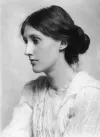
“I think writing, my writing, is a species of mediumship. I become the person.”
Quote collection
Thinking Quotes — page 810 of 4756
“Lines slip easily down the accustomed grooves. The old designs are copied so glibly that we are half inclined to think them original, save for that very glibness.”
“I am all the time thinking about poetry and fiction and you.”
“I'm fundamentally, I think, an outsider. I do my best work and feel most braced with my back to the wall. It's an odd feeling though, writing aginst the current: difficult entirely to disregard the current. Yet of course I shall.”
“It is permissible even for a dying hero to think before he dies how men will speak of him hereafter. His fame lasts perhaps two thousand years. And what are two thousand years?... What, indeed, if you look from a mountain top down the long wastes of the ages? The very stone one kicks with one's boot will outlast Shakespeare.”
“I was in a queer mood, thinking myself very old: but now I am a woman again - as I always am when I write.”
“It was strange to think that all the great women of fiction were, until Jane Austen's day, not only seen by the other sex, but seen only in relation to the other sex. And how small a part of woman's life is that.”
“The human frame being what it is, heart, body and brain all mixed together, and not contained in separate compartments as they will be no doubt in another million years, a good dinner is of great importance to good talk. One cannot think well, love well, sleep well, if one has not dined well.”
“Yet Byron never made tea as you do, who fill the pot so that when you put the lid on the tea spills over. There is a brown pool on the table--it is running among your books and papers. Now you mop it up, clumsily, with your pocket-hankerchief. You then stuff your hankerchief back into your pocket--that is not Byron; that is so essentially you that if I think of you in twenty years' time, when we are both famous, gouty and intolerable, it will be by that scene: and if you are dead, I shall weep.”
“Neither of us knows what the public will think. There's no doubt in my mind that I have found out how to begin (at forty) to say something in my own voice; and that interests me so that I feel I can go ahead without praise.”
“How then did it work out, all this? How did one judge people, think of them? How did one add up this and that and conclude that it is liking one felt, or disliking?”
“Without those forerunners, Jane Austen and the Brontes and George Eliot could no more have written than Shakespeare could have written without Marlowe, or Marlowe without Chaucer, or Chaucer without those forgotten poets who paved the ways and tamed the natural savagery of the tongue. For masterpieces are not single and solitary births; they are the outcome of many years of thinking in common, of thinking by the body of the people, so that the experience of the mass is behind the single voice.”
“Now to sum it up,' said Bernard. 'Now to explain to you the meaning of my life. Since we do not know each other (though I met you once I think, on board a ship going to Africa), we can talk freely. The illusion is upon me that something adheres for a moment, has roundness, weight, depth, is completed. This, for the moment, seems to be my life. If it were possible, I would hand it you entire. I would break it off as one breaks off a bunch of grapes. I would say, "Take it. This is my life.”
“Half the time she did things not simply, not for themselves; but to make people think this or that; perfect idiocy she knew for no one was ever for a second taken in.”
“My notion's to think of the human beings first and let the abstract ideas take care of themselves.”
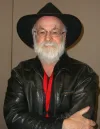
“Do you think there’s anything to eat in this forest?” “Yes,” said the wizard bitterly, “us.”
“They think written words are even more powerful,’ whispered the toad. ‘They think all writing is magic. Words worry them. See their swords? They glow blue in the presence of lawyers.”
“Please give us a simple answer, so that we don't have to think, because if we think, we might find answers that don't fit the way we want the world to be”
“… you were so worried about legal and illegal that you never stopped to think about whether it was right or wrong.”
“I don't think I've drunk enough beer to understand that.”