
“I see someone play, or I listen to a record, and I think, "How did they make that sound?' It's not emulation; it's more building a vocabulary that can be called up at a moment's notice.”
Quote collection
Thinking Quotes — page 938 of 4756
“I think if people have more of an understanding of what I'm doing, then they'll appreciate it and get into it more.”
“I think Pro Tools is pretty analogous to how people composed music on tape back in the 70s, taking little fragments of things and saying, 'How can we organize these in a sensible way'?”
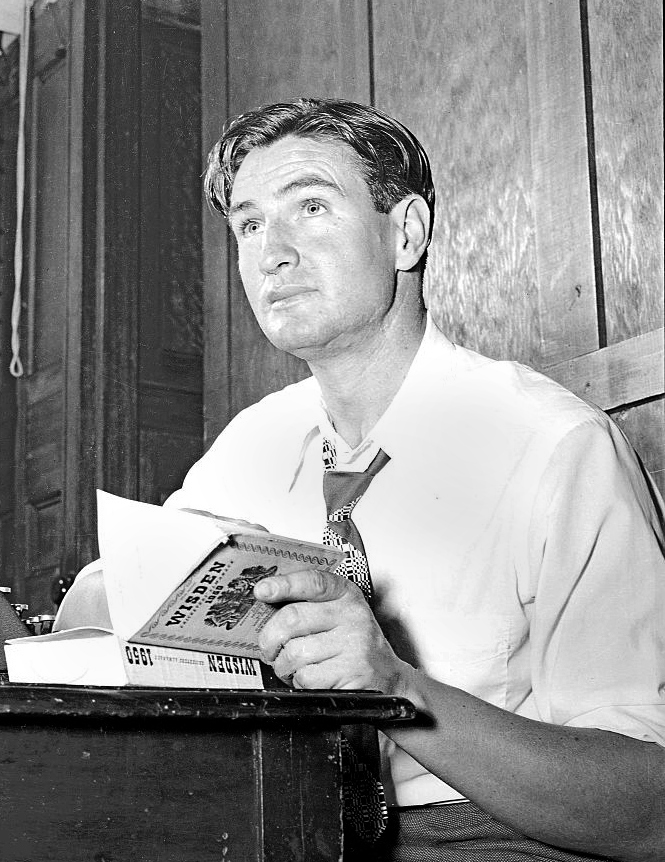
“I am too old to think.”

“Sometimes playing TV can be really nerve-wracking, and I think I tend to handle that by trying to look at my band-mates as frequently as possible and ignore everything else.”
“I think that my parents' only regret is that they wasted so much money on my stupid prestigious university degree.”

“You think your pains and heartbreaks are unprecedented in the history of the world, but then you read. [and then you discover that others have suffered much more than you and your problems look good in comparison]”
“You're getting to be a big boy,' I said desperately, 'it's time you started thinking about your future.' 'I'm thinking about my future,' said Sonny, grimly. 'I think about it all the time.”
“I think Americans are terrified of feeling anything. I never met a people more infantile in my life.”
“Years ago, when he was around fourteen, he'd been all hipped on the idea of going to India. He read books about people sitting on rocks, naked, in all kinds of weather, but mostly bad, naturally, and walking barefoot through hot coals and arriving at wisdom. I used to say that it sounded to me as though they were getting away from wisdom as fast as they could. I think he sort of looked down on me for that.”
“I'm beginning to think that maybe everything that happens makes sense. Like, if it didn't make sense, how could it happen?”
“What kind of programmer is so divorced from reality that she thinks she'll get complex software right the first time?”

“It is hard to compare cultures without overgeneralizing, but I think a lot of American poetry has an assertiveness - an upbeat quality - that's less typical of Canadian poetry. Of course there are poets in both countries to whom that generalization does not apply. Speaking broadly, I'd describe Canadians as being a bit more reserved than Americans. Not less opinionated - just less direct.”
“I can't read my poem "Distracted by an Ergonomic Bicycle" without thinking of Seattle, where the events of the poem took place, and I can't read "In Defense of the Semicolon" without thinking of Toronto - but why should that matter to anyone else? If another reader imagines "In Defense of the Semicolon" taking place in New Orleans, great.”
“I don't think I did write any poems to fill narrative gaps. Not consciously, anyway. As much as possible, I try to discover my poems' subject matter through the act of writing, instead of deciding ahead of time what my poems will be about.”
“It's not realistic to imagine that any poem will last forever. Our species won't last forever! We try to capture and preserve our impressions of reality because it's all going away: everything we think and remember, everything we've ever felt, everyone we love.”
“For me, intuitive thinking means associative thinking; intuition causes us to introduce narrative or figurative elements into a poem before we're able to explain why those elements belong.”
“I don't think I'd ever get any better as a poet if I didn't push myself, very deliberately, to grow. My best poems surprise me, as they should, but I fight them at every turn, possibly just because I'm stubborn.”
“I think that being mindful of your own biases tends to lead you into ambiguity, not clarity, and that following those ambiguities is the only way to approach the universal.”
“I do consider myself Canadian, but I feel American, too. I've spent more than fifteen years in each of the two countries, so really I just think of myself as a dual citizen, which is what I am. Thankfully, I've never been forced to choose!”